Petros® Stone LLP: Sourcing & Processing Calacatta Marble
 Author: Rishabh Jain-Director-Petros Stone LLP
Article Date: 03.09.2026
How Petros® Stone LLP Sources and Processes Calacatta Marble for Luxury Projects
Petros® Stone LLP’s sourcing, Italian quarry relationships, block selection, gang-saw cutting, resin treatment, calibration, and export process.
Petros® Stone LLP sources
Calacatta marble through direct partnerships with authentic Italian quarries, then takes every block through a controlled, multi-stage process — selection, digital scanning, ultrasound testing, gang-saw cutting, vein-matching, resin treatment, calibration, and export-grade packaging — before it reaches a project site. Backed by 30+ years of experience, exports to 50+ countries, DGFT Star Export House certification, an in-house production team, and a dedicated
Germany office in Schramberg, Petros® Stone LLP manages the full journey from quarry to finished installation rather than handing it off between middlemen.
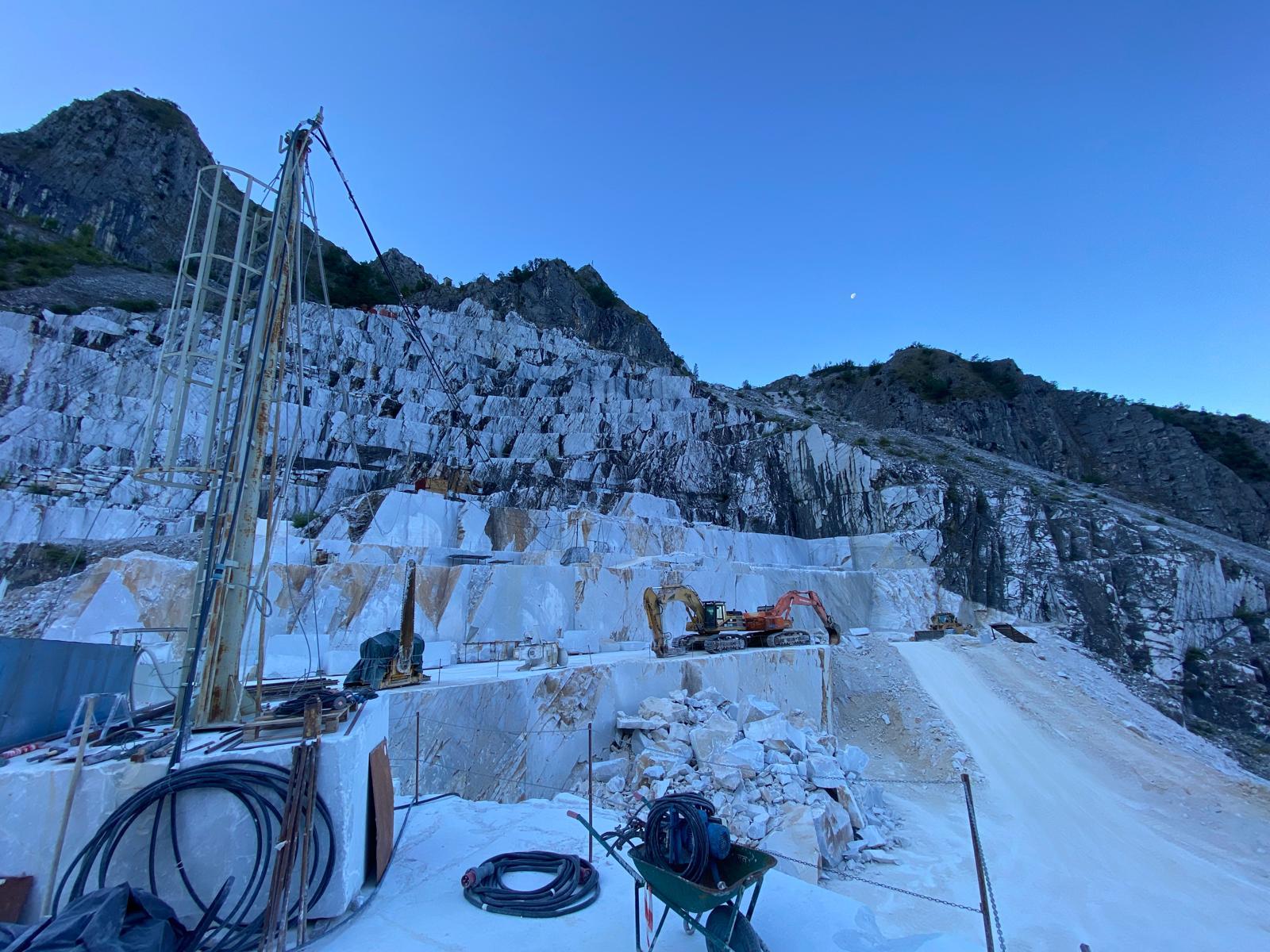
Sourcing from Authentic Calacatta Quarries
Not all ‘Calacatta’ in the market comes from where it claims to. Petros® Stone LLP works directly with a small group of authentic mines rather than open-market brokers, including Calacatta Crestola, The Marbo Company, Betofly Mines, and Calacatta Macchia Vecchia in Santi Quarry. These are long-standing, deep-rooted partnerships built over years, not one-off purchase orders, which is what allows Petros® Stone LLP to guarantee provenance and consistency on material that carries a Calacatta name. Beyond these named partners, the company works with three or more additional quarry relationships that remain undisclosed for trade-secret and competitive reasons.
Block Selection | Where Experience Matters Most
Reading a marble block — judging vein direction, mineral consistency, fissure risk, and color depth — is a skill built over decades, not something that can be fully systematized. Founder and COO Vikram Jain brings more than 30 years of hands-on experience to this step and personally travels to Italy for high-value selections, combining ultrasound testing with the kind of judgment that only comes from having handled thousands of blocks. It's this pairing of instrumentation and instinct that keeps material consistent from one shipment to the next.
Client Fly-Outs for Block Selection
For discerning clients — particularly those who want to see the full range of Calacatta variety available before committing — Petros® Stone LLP arranges fly-outs to Italy to handpick blocks in person. Beyond the technical benefit of choosing exact veining and tone, it gives clients a story to carry with them: a direct hand in selecting the exact stone that will become part of their home or project, long before it's ever installed.
A Different Kind of Buying Experience
Clients who have gone through this process consistently describe it as fundamentally different from selecting slabs off a showroom floor, more collaborative, more transparent, and far more personal than a standard transaction.
Slab Scanning and Ultrasound Verification
Once a block is cut, every slab is digitally scanned to map its vein pattern, color variation, and surface characteristics, the foundation for any vein-matching or layout planning that follows. Ultrasound testing is used earlier and throughout the process to detect internal fissures or density inconsistencies invisible to the naked eye, particularly important for large-format slabs destined for flooring, facades, and staircases where structural reliability matters as much as appearance.
Factory Processing: Precision Cutting
At the factory, blocks and slabs move through an automated setup built around Breton and Pedrini machinery, industry benchmarks for precision gang-saw cutting and slab processing. This equipment, paired with an in-house technical team, keeps tolerances tight and consistent across large production runs, a non-negotiable when a single project may require hundreds of matched slabs.
Vein-Matching for Custom, Bespoke Builds
For architectural and custom projects, slabs are sequenced and digitally laid out before any cutting takes place, so book-matching and vein-matching can be planned and approved by the client in advance. This is where the earlier scanning step pays off directly — a mismatched vein noticed after installation is a far costlier problem than one caught on a digital layout beforehand.
Resin Treatment and Pigment Matching
Natural fissures and porosity are common in premium marble, including Calacatta, and are treated with resin and hardener to stabilize the stone and improve durability. The critical, often-overlooked step is pigment matching: hardener and resin are calibrated against each slab's natural tone so the treated areas are effectively invisible once finished. Every batch is tested on a sample before being applied at scale, ensuring the final finish reads as seamless, natural stone rather than a repaired surface.
Calibration, Quality Control, and Export Packaging
Finished slabs are calibrated to a uniform thickness for consistent, gap-free installation, then pass through final
quality control checkpoints— with third-party inspection available for large-scale projects on request. From there, material is prepared for international shipment using export-grade packaging built for long-distance transit, protecting edges, finish, and structural integrity from quarry to final delivery.
Frequently Asked Questions
What is the difference between Calacatta and Calacatta Statuario?
Calacatta typically shows bolder, thicker gold-grey veining on a warmer white background, while Calacatta Statuario has finer, greyer veining on a brighter white base. The two are sourced from different quarry characteristics and should never be treated as interchangeable names.
How does Petros® Stone LLP verify the authenticity of its Calacatta marble?
Petros® Stone LLP sources directly from named, authentic quarries, including Calacatta Crestola, The Marbo Company, Betofly Mines, and Calacatta Macchia Vecchia in Santi Quarry, rather than through open-market intermediaries, allowing origin and material consistency to be verified at the source.
What is vein-matching and why does it matter?
Vein-matching is the process of sequencing and laying out slabs so their natural veining flows continuously across a surface. It's planned digitally after slab scanning and approved before cutting, which is essential for custom, large-format installations.
Is resin-treated marble as durable as untreated marble?
Resin treatment stabilizes natural fissures and porosity common in premium marble, improving durability without compromising appearance when pigment-matched correctly to the slab's natural tone.
Can clients select their own marble blocks?
Yes. Petros® Stone LLP arranges client visits to partner quarries in Italy for hands-on block selection, particularly for clients who want to see the full range of available varieties before committing to a project.